
Posted by Pushys Team on 10th Sep 2026
DJI Avinox Motor Explained: What It Is and Why eMTB Riders Are Talking About It
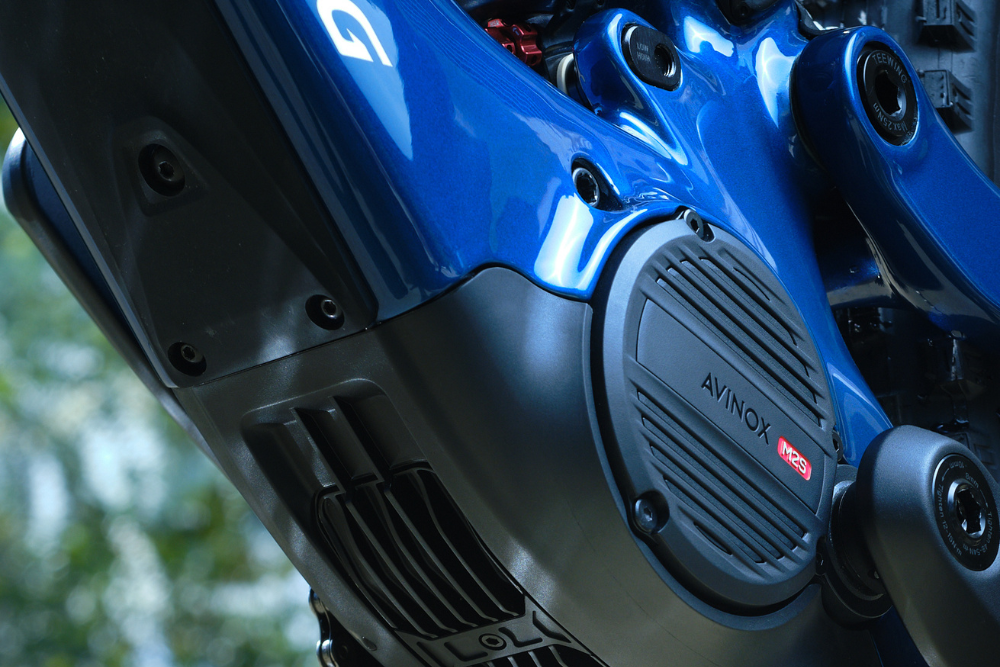
If you've been shopping for an electric mountain bike recently, you've probably seen the name DJI Avinox come up - often with more excitement than most motor announcements get. DJI, the company best known for building the drones and camera gimbals that changed how people shoot video, has moved into E-Bike motors, and the mountain bike world has taken notice.</p?>
Here's what the Avinox motor actually is, how it compares to the motors you already know, and why it's worth paying attention to if you're considering a Teewing.
What is the DJI Avinox motor?
Avinox is DJI's mid-drive motor system for electric mountain bikes - a compact, centre-mounted motor paired with a torque sensor, DJI's own battery packs, and a companion app for tuning ride characteristics. Unlike DJI's consumer products, Avinox isn't sold directly to riders; it's supplied to bike manufacturers, who build it into their own frames. Teewing is one of a growing list of brands doing exactly that, alongside names like Amflow, Velduro, Orbea, Mondraker, and Forbidden.
What's made Avinox stand out isn't just that a well-known tech company entered the space - it's the numbers. DJI brought its experience building small, powerful, precisely controlled motors (the same fundamental engineering problem as a drone motor, just applied differently) to a category that's historically been dominated by a handful of players: Bosch, Shimano, and Brose chief among them.
The two generations: M1 and M2S
Since launch, DJI has already iterated on Avinox:
- The original M1 motor delivers 105Nm of torque - competitive with the top-end motors from Bosch and Shimano at launch.
- The newer M2S motor pushes that to 130Nm of torque, a meaningful jump that puts it ahead of most mid-drive competitors on paper, while DJI has kept the unit light and compact.
This matters for anyone reading older reviews or comparing spec sheets: a lot of the early Avinox coverage (including some marketing flyers still floating around) references the M1 generation. If you're comparing current bikes, always check which generation is actually fitted - the difference in climbing power and how the bike feels on steep, technical terrain is noticeable.
How does it compare to Bosch and Shimano?
The honest answer is: very well on paper, and reviewers who've spent real time on Avinox-equipped bikes (Flow Mountain Bike, NSMB, and others have published detailed rides) have generally come away impressed with the power delivery and how naturally it responds to pedalling input. A few points worth knowing:
- Torque: At 130Nm, the M2S motor matches or exceeds most Bosch Performance Line CX and Shimano EP8/EP801 configurations, which typically sit in the 85-90Nm range on standard tunes.
- Weight and packaging: DJI's background in building small, dense electronics shows up here — Avinox systems tend to be lighter and more compact than equivalent Bosch or Shimano units, which contributes to eMTBs like the Teewing Turbo Force and Flux feeling noticeably lighter overall than similarly specced bikes on older motor platforms.
- Ecosystem maturity: This is where Bosch and Shimano still have an edge. Both have been in the e-bike business for over a decade, with extensive dealer networks, spare parts availability, and long track records for reliability. Avinox is new - DJI only entered this category recently - so the ecosystem around it (service knowledge, parts, long-term reliability data) is still being built out.
For most riders, the practical takeaway is: Avinox-powered bikes currently offer some of the best power-to-weight numbers available, but you're adopting newer technology with a shorter track record than Bosch or Shimano.
Why Teewing specifically?
Teewing is a relatively new name in Australia - it doesn't have the decades of brand recognition that Trek, Specialized, or Giant carry. What it does have is early, close access to Avinox hardware, and it's built its two current lines specifically around showing off what the motor can do:
- The Turbo Force series (trail-focused) runs the M2S motor and is built around a lightweight carbon frame - reviewers have specifically called out how the E-MTB doesn't feel like it's carrying extra weight for its battery and motor, which is a common complaint on heavier e-MTBs elsewhere in the category.
- The Flux series (enduro-focused) pairs the same motor platform with a high-pivot suspension design, aimed at riders who want more travel and capability for rougher terrain without giving up the power-to-weight benefit.
Both lines use the long-range 800Wh battery, which is on the larger end for this category and suits longer days in the saddle without needing a spare battery.
Is a DJI Avinox bike the right choice for you?
If you're the kind of rider who wants to be on current technology and values a lighter eMTB with strong climbing power, Avinox-powered eMTBs like the Teewing range are worth serious consideration - the performance numbers back up the hype. If you'd rather stick with the most established, longest-proven motor ecosystem and prioritise a decade-plus track record over the newest tech, Bosch and Shimano-equipped bikes remain a very safe choice.
Either way, it's worth going in with accurate information rather than relying on brand recognition alone - a newer brand with newer, better-performing hardware can be a smarter buy than a familiar name running an older motor platform.