
Posted by Tech Team on 17th Sep 2026
Shimano SPD-SLR Cleats & Pedals Explained: SPD-SL vs SPD-SLR, and PD-R9300 vs PD-R9100
Quick answer: Shimano has replaced its road pedal and cleat platform at both the Dura-Ace (PD-R9300) and Ultegra (PD-R8200) level, and for the first time designed the pedal, cleat and S-PHYRE shoe together as a single system. The headline change is the new SPD-SLR cleat, which cuts stack height by 2.3 mm, engages faster (a 10.5° engagement angle versus 15.5° on the old SPD-SL) and is up to 25% lighter. Upgrading from the outgoing PD-R9100 (SPD-SL) to the new PD-R9300 (SPD-SLR) gets you a lower, more stable, more direct connection to the pedal. You can still keep your existing shoes by fitting the new grey cleat enabling use of the new pedals.
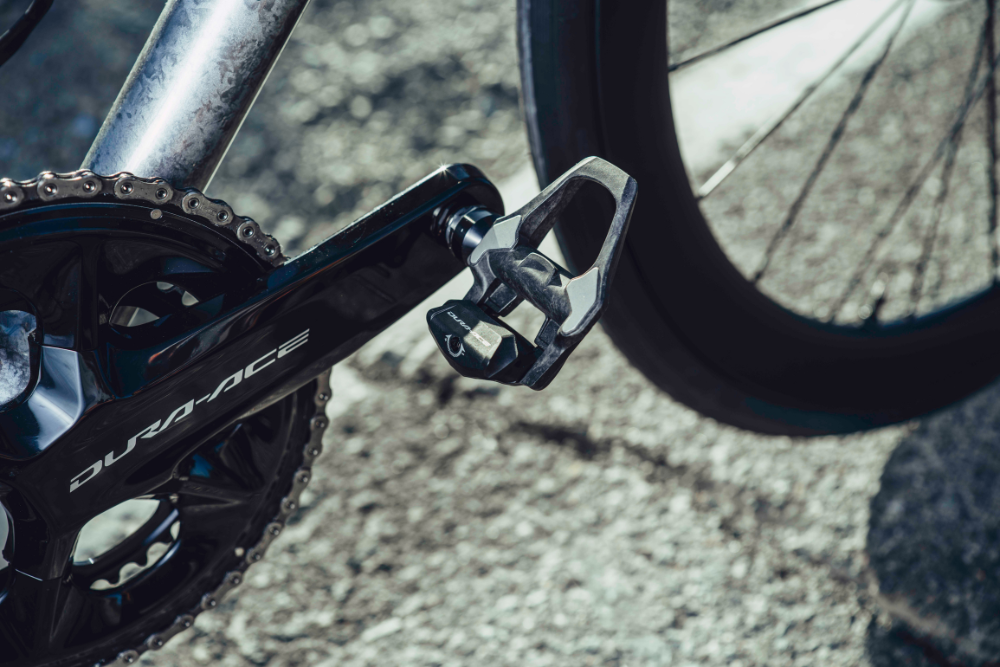
What is Shimano's SPD-SLR system?
Shimano has rebuilt its top two road pedal tiers - Dura-Ace PD-R9300 and Ultegra PD-R8200 - and paired them with a redesigned cleat. The naming shift is the tell: the outgoing cleat was SPD-SL, the new one is SPD-SLR, and it isn't a like-for-like swap.
The important part is how it was designed. Rather than updating the pedal on its own, Shimano engineered the pedal, the cleat and the new S-PHYRE road shoe as one connected system. That's why the biggest performance gain - a lower stack height - only appears in full when all three parts are used together, and why the cleat, not the pedal, carries most of the news in this launch.
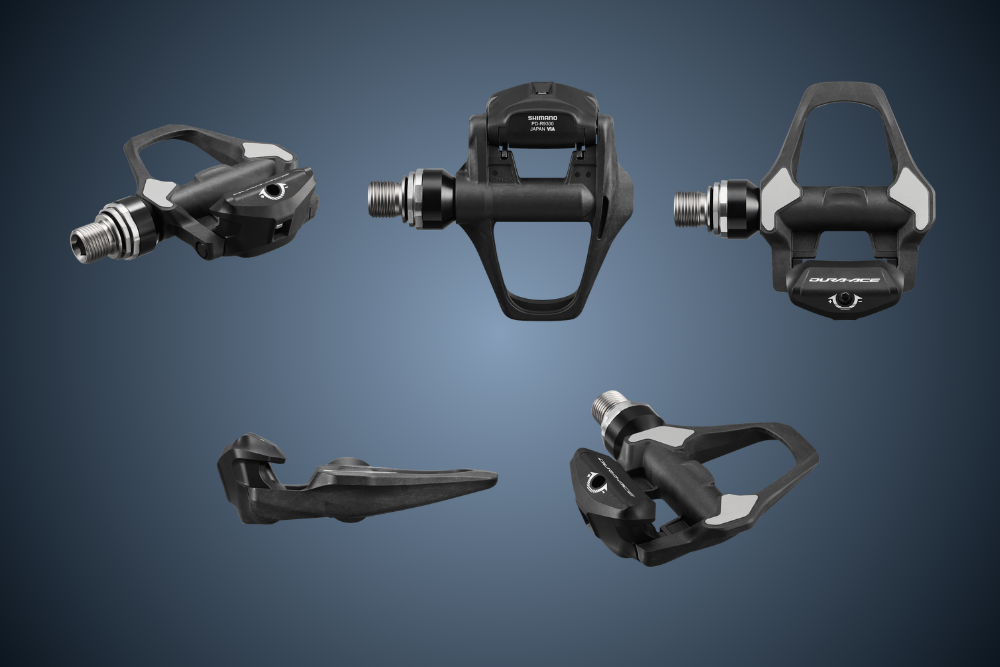
SPD-SL vs SPD-SLR: what actually changed
The cleat is doing most of the engineering work in this update.
- Lower stack height. The SPD-SLR cleat reduces stack height by 2.3 mm versus the old SPD-SL cleat. Less material between your foot and the pedal axle means more direct power transfer and a lower, more stable centre of mass over the pedal.
- Faster engagement. The catch zone at the front of the cleat is wider, and the engagement angle has narrowed from 15.5° (SPD-SL) to 10.5° (SPD-SLR). In plain terms: less heel rotation to clip in, and a more consistent catch.
- Lighter. The new cleats are up to 25% lighter than the outgoing SPD-SL version.
- Adjustment moves. Lateral (side-to-side) adjustment is now built into the cleat itself, while fore-aft adjustment comes from a larger range engineered into the sole of the new S-PHYRE and RC810 shoes.
In one line: SPD-SLR is lower, quicker to engage and lighter than SPD-SL - the lower stack height and the wider fore-aft adjustment are only fully unlocked with the new shoe platform.
Can you use your old shoes with SPD-SLR?
Yes - via the New grey cleat. It keeps you compatible with standard 3-bolt shoes so your current footwear isn't made obsolete.
The trade-off:
- You don't get the lower stack height benefit. The 2.3 mm reduction depends on the full new system.
- Your fore-aft adjustment range shrinks. In the new system, fore-aft adjustment lives in the sole of the new shoes. Run a grey cleat on an older Shimano shoe or a third-party shoe and your adjustment is limited to whatever range that shoe's sole allows - not the extended range the new system was built around.
So the grey cleat is a compatibility bridge. To unlock everything this update offers, you'll want the new shoe platform too.
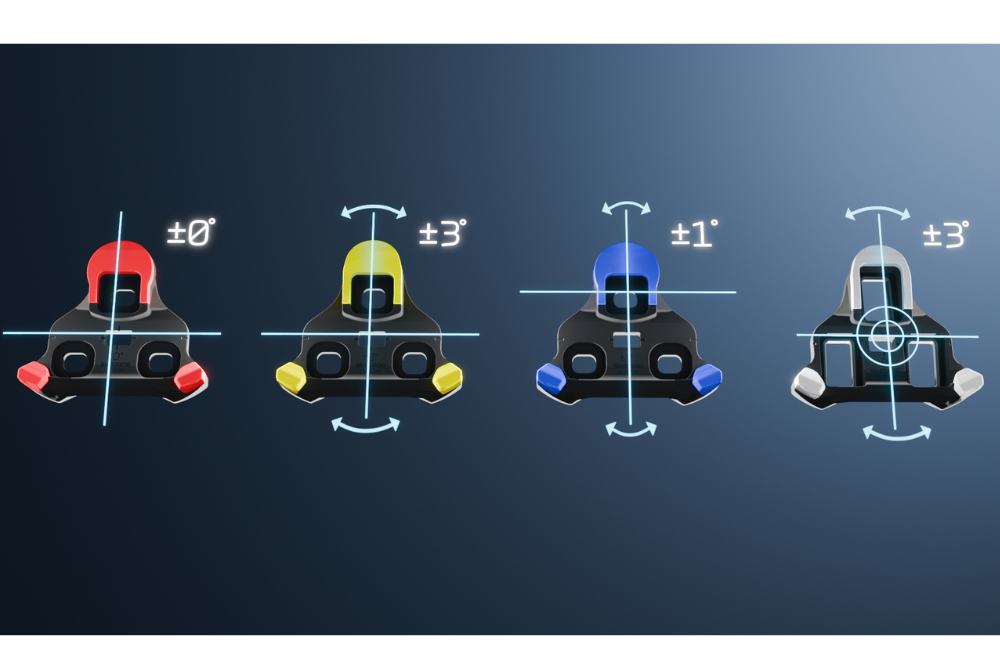
SPD-SLR cleat colours: which one is right for you?
There are four cleats, and the choice is about more than just float:
|
Cleat |
Float |
Best for |
|---|---|---|
|
Red |
Fixed |
Same float as previous SPD-SL - carried over |
|
Blue |
Light float |
Same float as previous SPD-SL - carried over |
|
Yellow |
±3° float |
Same float as previous SPD-SL - carried over |
|
Grey |
±3° (same as Yellow) |
Compatibility - built for standard 3-bolt shoes |
Red, blue and yellow keep the same float options as the previous generation, so your float preference doesn't change. The grey cleat is the one to understand: it has the same float as yellow, but it's built to run on standard 3-bolt shoes - which covers essentially every road shoe on the market that isn't from the new Shimano range.
New Shimano road pedals: PD-R9300 vs PD-R9100
If you're coming off the previous Dura-Ace pedal - the PD-R9100, which ran the SPD-SL cleat - here's what the move to the new PD-R9300 delivers:
- A lower stack height thanks to the new SPD-SLR cleat (2.3 mm closer to the axle).
- Faster, more consistent engagement from the wider catch zone and 10.5° engagement angle.
- Lighter cleats (up to 25%).
- An ultra-wide platform built for stability, paired with the ultra-low stack for efficiency.
- A system-first design, so the pedal, cleat and shoe work together rather than as three separate parts.
Because the R9100 generation used SPD-SL and the R9300 generation uses SPD-SLR, the jump from R9100 to R9300 is the SPD-SL-to-SPD-SLR jump - you'll be fitting new cleats as part of the upgrade regardless.
Dura-Ace PD-R9300 vs Ultegra PD-R8200: which should you buy?
Both pedals share the same ultra-wide platform and the same ultra-low stack height, so both get you the core efficiency benefit. The difference between the tiers comes down to stiffness, spin efficiency and axle finish - not the geometry that drives the stack-height gain.
|
Dura-Ace PD-R9300 |
Ultegra PD-R8200 |
|
|---|---|---|
|
Platform |
Ultra-wide, ultra-low stack height |
Same platform architecture |
|
Stiffness |
Baseline (stiffest in the range) |
11% less stiff than Dura-Ace |
|
Rotational resistance |
Baseline (lowest) |
53% higher, from a less-refined axle and bearing surface |
|
Axle |
Heat-treated, refined bearing surfaces |
Standard axle/bearing finish |
|
Long-axle (+4 mm) |
Yes |
Yes |
|
Availability |
Standard in stock now; |
Dec/Jan (both versions) |
TL;DR: Dura-Ace PD-R9300 is the stiffer, freer-spinning choice for riders chasing the fastest setup. Ultegra PD-R8200 gives you the same core platform and the same stack-height benefit at a lower price.
Which shoes pair with the SPD-SLR system?
Two road shoes are built specifically around SPD-SLR
|
S-PHYRE SH-RC910 |
SH-RC810 |
|
|---|---|---|
|
Tier |
Flagship |
Second-tier, race-inspired |
|
Last |
DYNALAST 2.0 |
DYNALAST 2.0 (same) |
|
Heel |
Carbon heel cup with anti-twist stabilisation |
External heel stabiliser + extended midsole |
|
Midsole |
Carbon Hollow Core, seamless for |
Rigid hollow-channel carbon |
|
Pedal platform |
SPD-SLR, extra-wide cleat adjust range |
SPD-SLR, extra-wide cleat adjust range (same) |
|
Closure |
Low-profile BOA Li2, two dials |
Low-profile BOA Li2, two dials (same) |
|
Availability |
Preorder from the first week of October |
In stock now |
Both shoes give you the same fit platform and the same pedal compatibility, so the decision mostly comes down to stiffness and budget. The RC910 is the stiffer, lighter, carbon-heel-cup flagship; the RC810 delivers the same last, the same pedal system and most of the fit benefit at a more accessible price, with replaceable heel pads as a bonus.
For the full shoe breakdown, see our guide: S-PHYRE RC910 vs RC810 vs RX710 compared.
Availability
- Dura-Ace PD-R9300 (standard axle): expected 25th September.
- Dura-Ace PD-R9300 (long axle, +4 mm): expected December/January.
- Ultegra PD-R8200 (both axle lengths): expected December/January.
- S-PHYRE SH-RC910 shoes: expected the first week of October.
- SH-RC810 shoes: expected 25th September.
FAQ
Is the new SPD-SLR cleat compatible with my old Shimano shoes?
Yes, via the grey cleat, which is built for standard 3-bolt shoes. You'll keep compatibility, but you won't get the new system's lower stack height, and your fore-aft adjustment will be limited to what your current shoe's sole allows rather than the wider range built into the new shoe platform.
What's the difference between Dura-Ace PD-R9300 and Ultegra PD-R8200?
Both share the same ultra-wide, ultra-low-stack-height platform. Dura-Ace is stiffer (11% more than Ultegra) and spins more freely (53% lower rotational resistance) thanks to a heat-treated axle and more refined bearing surfaces. Ultegra gives you the same core platform and stack-height benefit at a lower price.
Do I need new cleats to use the new pedals?
Yes. The new SPD-SLR pedals are designed around the new cleat geometry, so you'll be fitting new cleats regardless of which colour - and therefore which compatibility level - you choose.
Why does the engagement angle change matter?
The engagement angle dropped from 15.5° (SPD-SL) to 10.5° (SPD-SLR), combined with a wider catch zone at the front of the cleat. That means less heel rotation to clip in, so engagement is faster and more consistent.
Do the new S-PHYRE shoes work with my current Shimano pedals?
The RC910 and RC810 are built around the new SPD-SLR platform. If you're running older Shimano pedals or a third-party system, check pedal and cleat compatibility before buying.
Is the SH-RX710 gravel shoe compatible with the SPD-SLR road system?
No. The RX710 uses its own Pontoon cleat system, separate from the SPD-SLR road platform used by the RC910 and RC810.
Ready to upgrade?
Shop the new Shimano SPD-SLR pedals, cleats and S-PHYRE shoes now. If you're not sure which cleat colour or shoe fit is right for you, get in touch and we'll help you dial in the full system.
Where next? Read our guide to the next-gen Dura-Ace R9370 C50 disc wheelset.