
Posted by Stuart Cleland on 6th Feb 2026
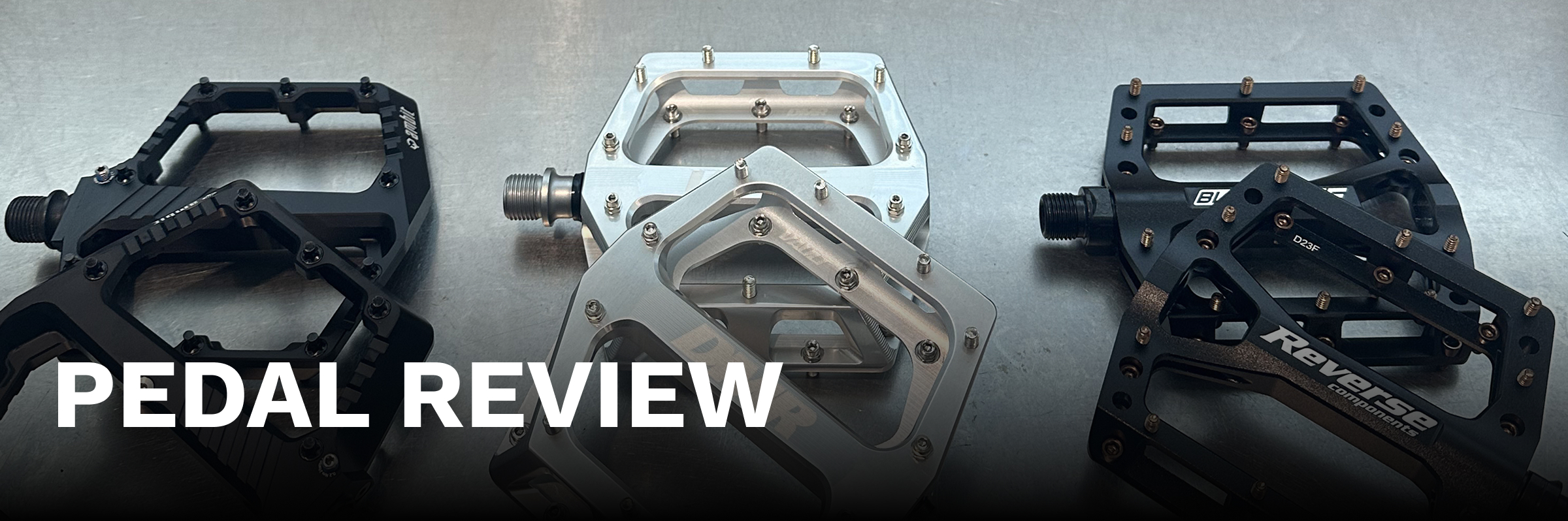
The Pushy’s team chose two of our more experienced MTB riders to test three flat pedals aimed at pump track and dirt jump riding. Pump tracks are a great test for pedal performance, if the grip or platform shape isn’t right, it’s easy to pick up . While this test was conducted on the pump track, we think these results should reflect well to most trail, enduro or DH riders looking for a durable and high-performance flat pedal.
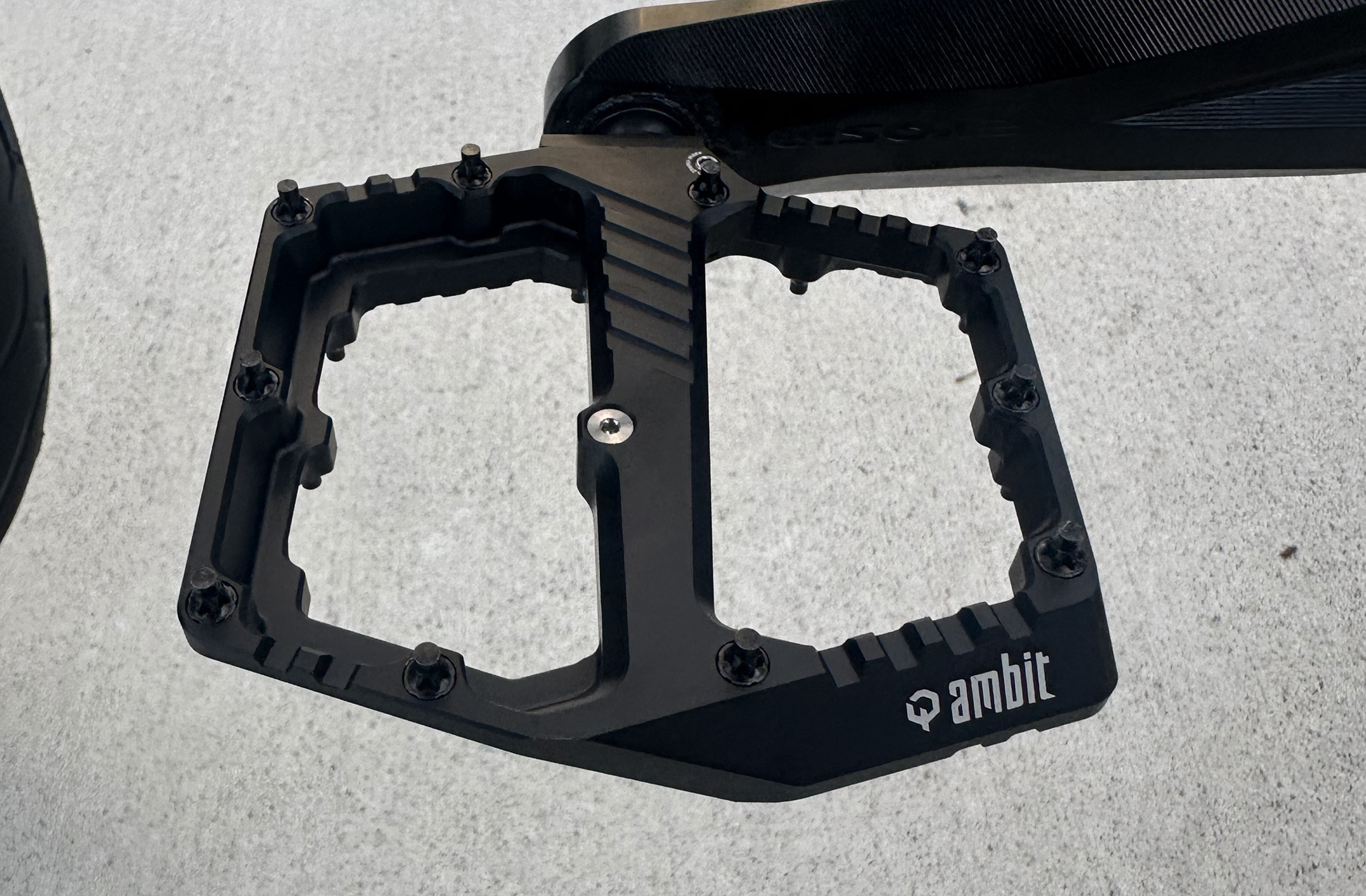
Ambit Breach Flat Pedals:
Ambit is a relatively new brand who have formed a reputation through their innovation in all of their products. A unique feature of the Breach pedal is the internal rotation brake, which uses a grub screw to fine tune how easily the pedal spins. This is a massive benefit for pump track and dirt jumpers, as it ensures the pedal stays in the exact same position when your feet leave the pedal platforms.
In saying that the platform might hit or miss depending on your shoe size. Some riders may find that the gaps in the pedal body allow the sole of the shoe to sag inward. Ambit’s relatively flat shape also favours riders who prefer riding with the pedal towards the front of their foot.
Another key feature of the Breach Pedal is its serviceability, with just three screws allowing you to remove the entire pedal axle. We haven't needed to service one yet, but it's great to know the process is straight forward when the time comes.
The design is clean, modern and angular, we think it’s one of the best looking pedals on the market right now. Furthermore, Ambit has gone the extra mile by offering the pedals in three sizes for different shoe sizes, going a step above the two-size options that are commonly available on high-end pedals. We recommend consulting the sizing carefully and measuring your existing pedals to get an understanding of the best size for you, if you’re between sizes we’d advise sizing down.
DMR Vault Flat Pedals:
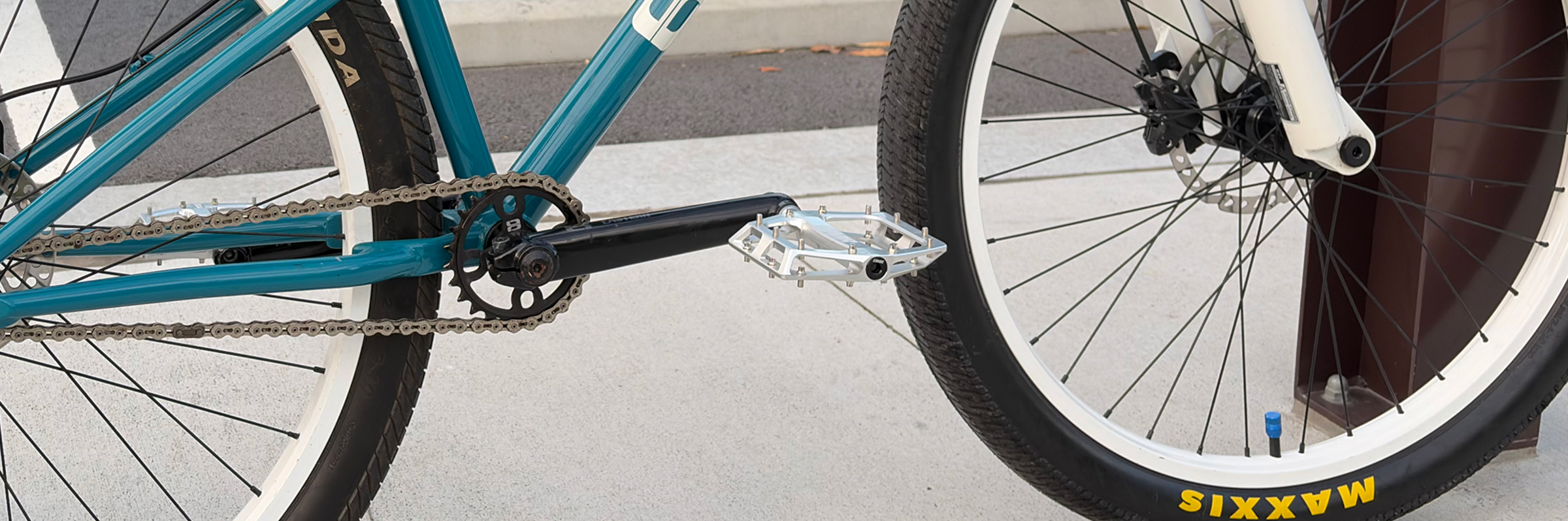
DMR is one of the oldest names in the flat pedal market. More than a decade ago, the iconic V8 and V12 pedals could be found on many bikes around the world and many are still in service today - a testament to DMR’s durability.
Through that experience DMR developed the Vault with extensive testing and feedback from their pro team and vast feedback from their long history making pedals. The Vault pedals are well rounded with a large platform, 11 pins and a CNC’d body. With a concave shape the Vaults suit riders who prefer to pedal at their mid-foot. With a Chromoly axle and longer pins available the Vaults offer a versatile and robust pedaling platform.
While the Vault’s have a few less features than the Reverse or Ambit pedals included in this test, that’s reflected in the price. The Vault’s also come in a wider range of colours than the Reverse or Ambit pedals.
Reverse Components Pedal Black ONE Flat Pedals:
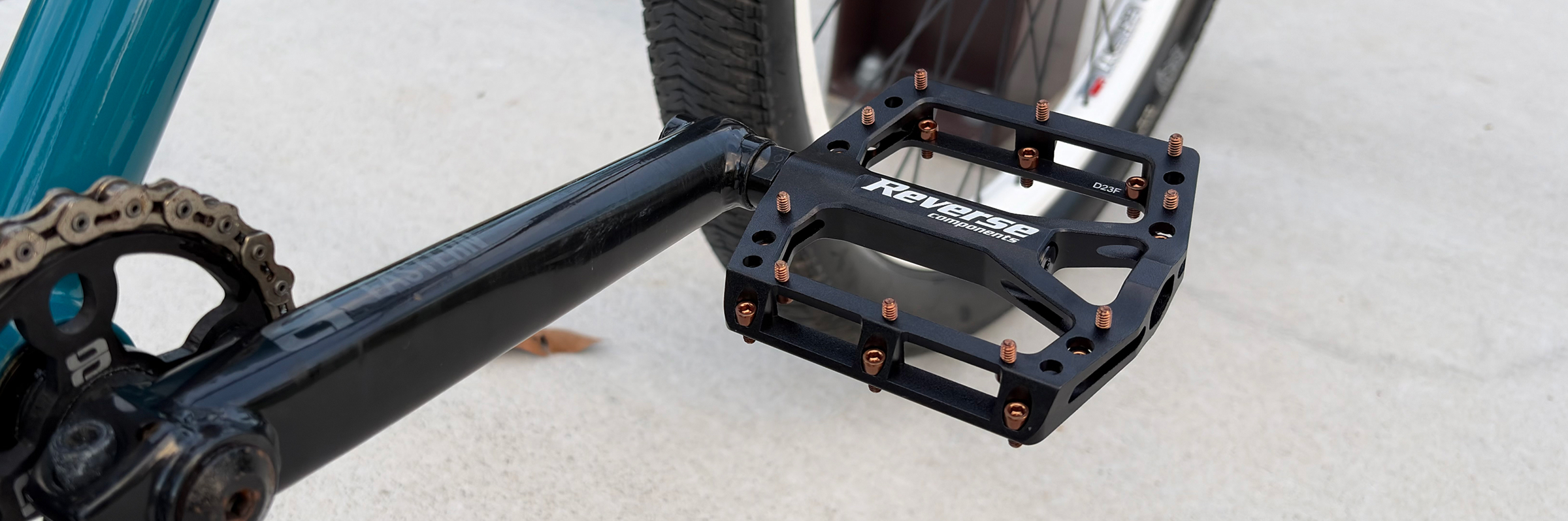
Reverse Components is a brand based in the Black Forest of Germany and offers a wide range of well designed and reliable parts and accessories, particularly focused on the enduro and freeride markets. The Black One pedals have the smallest platform out of the three but still offer plenty of grip with 10 pins, a thin body and a narrower youth option. The Black One has a convex shape suiting riders who prefer a mid foot pedaling platform.
The Reverse pedals also have a slow spinning axle making them great for tricks, although unlike the Ambit pedals this is not adjustable. Overall they’re a fuss-free design from a company that has a stellar reputation for making great quality gear.
Freddie Preferences:
I am fairly new to riding pump tracks and have always run clipless pedals in my mountain and gravel background. Testing out these three pedals has given me a lot of insight into what preferences come into play when choosing a flat pedal. My pick of these three was the Reverse Black One Pedals, I loved the convex shape, I found the mid foot riding position to be the most secure and comfortable. The Black One are a really well rounded pedal and would suit most riders chasing a reliable and versatile pedal.
Jaeden Preferences:
The DMR Vaults were my pick from this test. They felt large enough to offer support without being too big, this kept them from protruding too much and potentially catching the ground. There was less concave in this pedal compared to the Reverse pedals, which suits my slightly forward foot positioning. While there aren’t as many special features in the DMRs compared to the other two pedals, for general use the DMR’s are my pick for a great all-rounder.
Final Thoughts:
All three pedals performed well through testing although it really depends on what you are looking for to determine the best pedal for you.
The DMR Vault is a no-nonsense pedal with a large platform and adjustable pins out of the box. Both our testers liked the shape, feel and grip of this pedal. It’s a little bulkier than the other two and has fewer fancy features but it is an excellent all-rounder.
The Reverse Components Black One is the lightest and thinnest pedal of the bunch. The Convex design was favoured by one of our testers and is a great option for riders who like a mid-foot riding position. The smaller platform and the convex shape might not be for everyone (especially if you have big flippers) but overall, it’s a solid option if you are looking for a super thin pedal with excellent grip.
The Ambit Breach came out swinging, full of features that set this pedal apart from anything else on the market. It looks amazing and offers good grip however it was clear from our testing that platform size is particularly important when choosing this pedal. One thing to keep in mind, some of the unique features of this pedal are designed for riders hitting the biggest tricks in the game which sadly, our testers were not. It’s an excellent choice where tuneability, longevity and serviceability are paramount.